Overview: Commercial Electrical Contracting & Facility Services Considerations in Greater Bangor
Commercial enterprises, retail centers, medical clinics, hospitality venues, and institutional facilities throughout Greater Bangor rely on robust, uninterrupted three-phase electrical distribution to maintain daily operations. Commercial electrical failures lead to revenue loss, spoiled inventory, unsafe customer environments, and regulatory non-compliance. From complete tenant build-outs to power factor correction, transformer installations, and emergency egress lighting compliance, commercial electrical systems demand certified Master Electrician engineering.
Whether addressing immediate emergency safety hazards or planning strategic long-term facility upgrades, residential and commercial clients across Greater Bangor benefit from engaging independent electricians who possess rigorous diagnostic equipment and state licensing credentials.
In Greater Bangor, local architectural characteristics play an influential role in how electrical systems operate. Penobscot County experiences deeper sub-zero winter temperatures than coastal Maine, creating high peak winter electrical heating loads. Electrical services in Bangor must withstand heavy ice buildup on overhead service masts and utility drops, requiring rigid 2-inch galvanized steel conduit masts securely guy-wired to roof rafters.
Three-Phase Power Distribution & Switchgear Systems in Greater Bangor
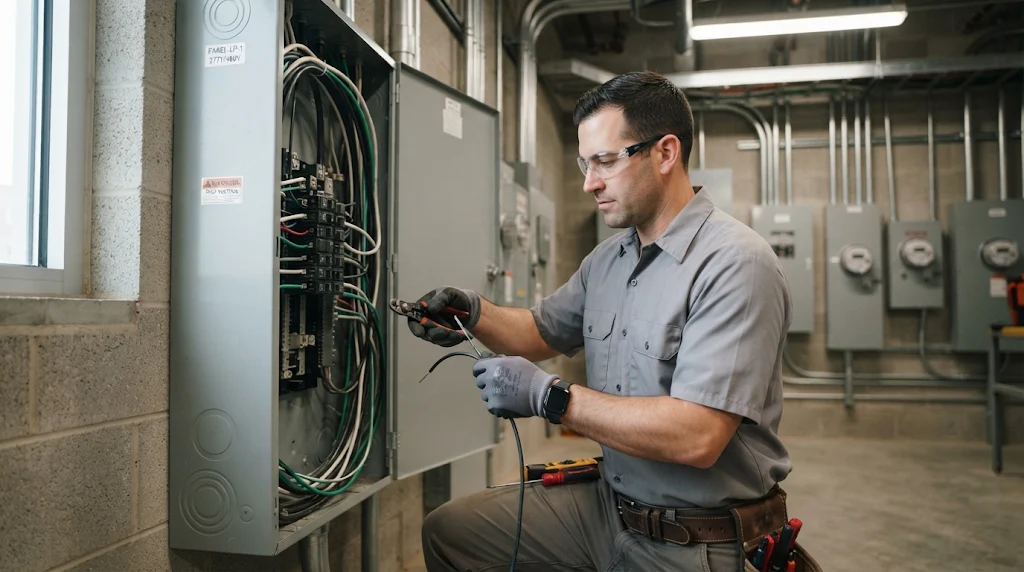
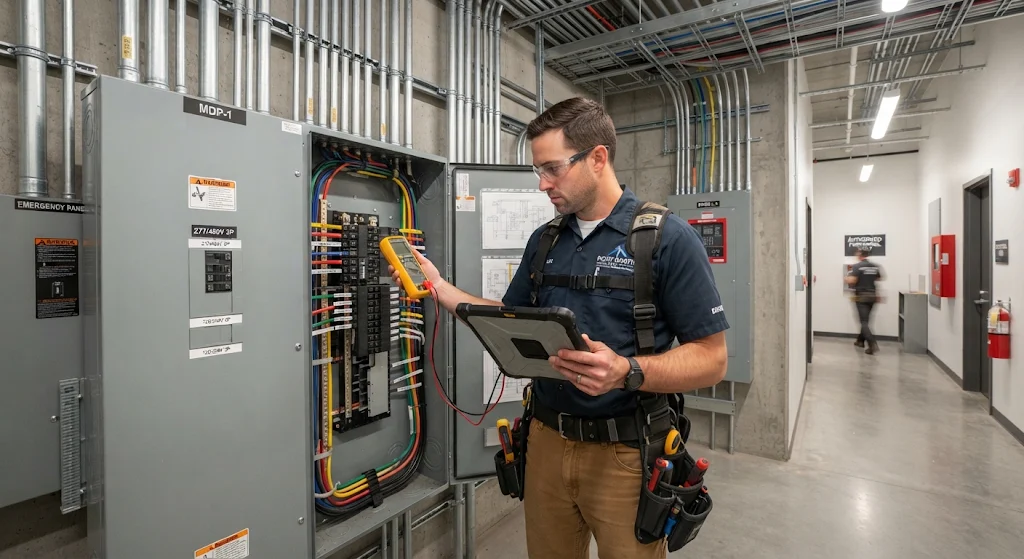
Unlike single-phase residential electrical, commercial operations in Greater Bangor require 120/208V or 277/480V three-phase electrical systems to power heavy HVAC chillers, commercial refrigeration racks, air compressors, and industrial manufacturing machinery. Commercial electricians install heavy-duty Main Distribution Panels (MDP), step-down dry-type transformers, and power factor correction capacitors, balancing loads across all three phases to minimize neutral current and prevent transformer overheating.
Tenant Improvements, Fit-Outs & Retail Modernization
Commercial leasing and property management in Greater Bangor frequently involves tenant fit-outs for new restaurants, professional offices, medical suites, and retail storefronts. Licensed electrical contractors design and route dedicated circuits in EMT (Electrical Metallic Tubing) conduit, install commercial busways, wire commercial kitchen cooking suites with shunt-trip breakers connected to fire suppression systems, and configure dedicated IT server room power.
Life Safety, Emergency Egress & Fire Alarm Integration
Commercial properties in Maine must adhere to strict NFPA 101 Life Safety Code standards enforced by local municipal fire marshals. This includes installing illuminated LED exit signs with 90-minute battery backup, emergency egress floodlights, central battery inverter systems, and electrical coordination with automated fire suppression and alarm systems. Regular annual testing and documentation ensure continuous code compliance.
Local Building Context & Permitting Oversight in Greater Bangor
All electrical trade operations within Greater Bangor are subject to the technical mandates of the National Electrical Code (NFPA 70) and oversight by the Maine Electricians' Examining Board alongside local municipal inspectors. Contractors pulling permits for Commercial Electrical work in Greater Bangor must ensure appropriate conductor sizing, continuous load derating factors, proper overcurrent protection device coordination, and comprehensive system grounding.
Furthermore, local utility coordination is critical. Electricians serving Greater Bangor routinely interface with regional electric utilities (such as Central Maine Power or Versant Power) to coordinate overhead drop disconnections, meter socket seals, cold-sequence disconnects, and underground service laterals. Adhering strictly to utility rules prevents dangerous delays and ensures that installations pass municipal inspection on the first visit.
Why Professional Electrical Referral Matters in Greater Bangor
WATT911 serves as an independent connection platform designed to streamline your search for qualified local electrical professionals. We connect you with independent local electrical contractors who maintain current commercial insurance, proper Maine Master or Journeyman licensing credentials, and established trade experience in Greater Bangor. All pricing, estimates, dispatch fees, and warranty protections are handled transparently between you and your contractor, ensuring clear expectations from project start to final sign-off.