Overview: Circuit Breaker Replacement & Distribution Protection Considerations in Greater Portland
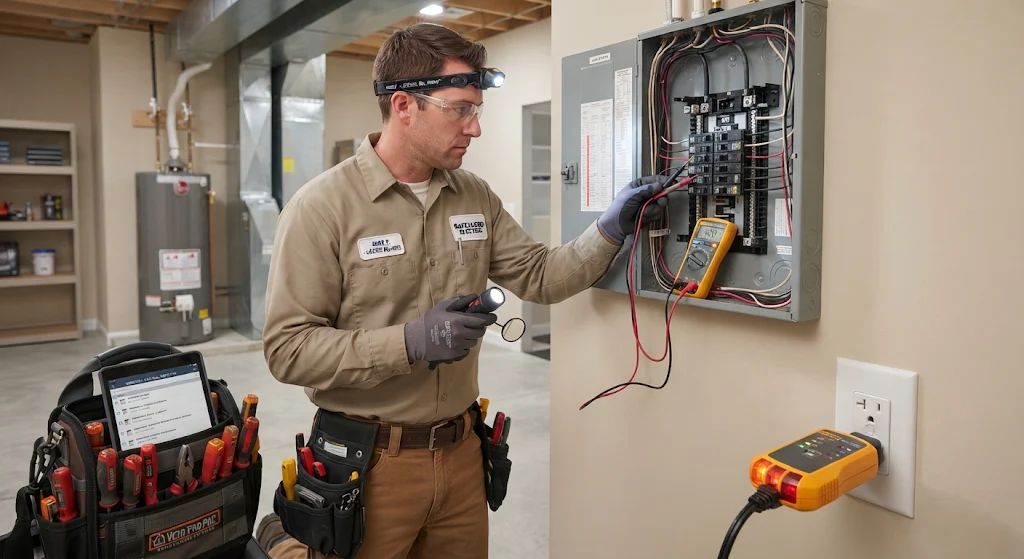
Circuit breakers are the fundamental safety sentinels of any electrical installation, designed to automatically interrupt current flow when amperage exceeds safe conductor thresholds. However, circuit breakers are mechanical devices containing thermal bi-metallic strips and electromagnetic coils that degrade over time. In Greater Portland, aging breakers can suffer from internal spring fatigue, burned busbar contact clips, or nuisance tripping. Replacing faulty or obsolete breakers is vital to preventing electrical fires and maintaining consistent property power.
Whether addressing immediate emergency safety hazards or planning strategic long-term facility upgrades, residential and commercial clients across Greater Portland benefit from engaging independent electricians who possess rigorous diagnostic equipment and state licensing credentials.
In Greater Portland, local architectural characteristics play an influential role in how electrical systems operate. Portland's historic peninsula housing stock features pre-1940 structures requiring non-invasive circuit tracing, knob-and-tube abatement, and arc-fault circuit protection under City of Portland inspections. High commercial density in the Old Port and along the Fore River requires scheduled evening shutdowns for switchgear maintenance and transformer balancing.
Thermal vs. Magnetic Tripping Mechanics in Greater Portland
A modern thermal-magnetic circuit breaker protects against two distinct hazards: moderate continuous overloads and sudden high-current short circuits. The thermal strip bends in response to sustained heat generated by minor overloads, tripping the breaker after a calculated delay. The magnetic coil reacts instantly (within milliseconds) to massive current surges caused by direct hot-to-neutral or hot-to-ground faults. Technicians in Greater Portland test breaker trip characteristics to ensure they open within manufacturer specifications.
AFCI & GFCI Dual-Function Breakers
Standard thermal-magnetic breakers cannot detect low-level electrical arcing caused by damaged cords, loose wire nuts, or drywall screws piercing Romex inside walls. Dual-function Arc-Fault Circuit-Interrupter (AFCI) and Ground-Fault Circuit-Interrupter (GFCI) breakers incorporate advanced digital microprocessors that analyze current waveforms in real time, detecting dangerous arcing signatures and minuscule ground leakages (4-6 milliamps) to prevent both electrical fires and fatal shocks.
Busbar Inspection & Matching Classified Breakers
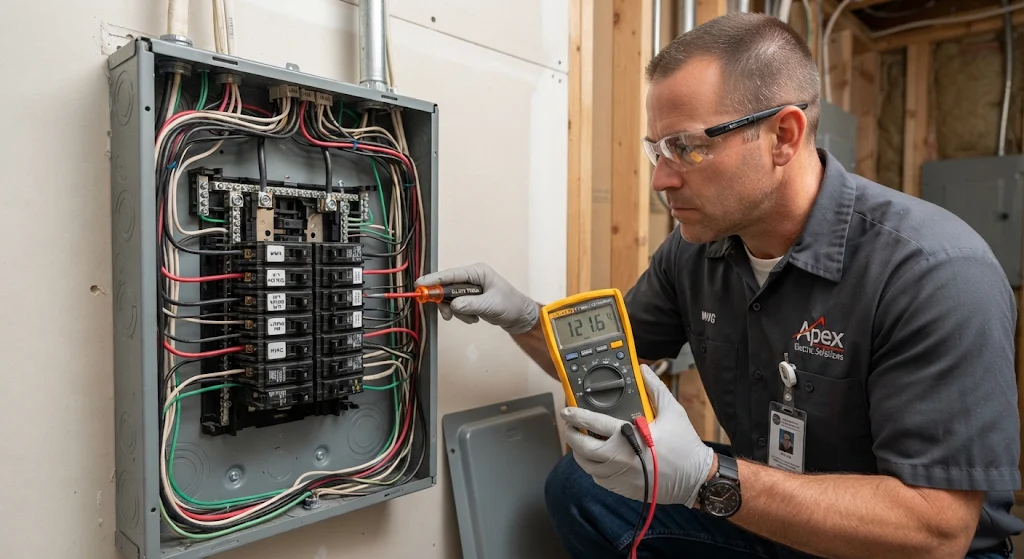
A breaker cannot function safely if the panel busbar stabs are pitted, oxidized, or melted from loose seating. Independent electricians serving Greater Portland inspect the panel interior with digital thermal optics. Critically, electricians never mix incompatible breaker brands; they install strictly UL-listed classified breakers designed specifically for the panel manufacturer (Square D QO/Homeline, Siemens, Eaton BR/CH) to avoid voiding panel warranties and violating NEC Article 110.3(B).
Local Building Context & Permitting Oversight in Greater Portland
All electrical trade operations within Greater Portland are subject to the technical mandates of the National Electrical Code (NFPA 70) and oversight by the Maine Electricians' Examining Board alongside local municipal inspectors. Contractors pulling permits for Circuit Breakers work in Greater Portland must ensure appropriate conductor sizing, continuous load derating factors, proper overcurrent protection device coordination, and comprehensive system grounding.
Furthermore, local utility coordination is critical. Electricians serving Greater Portland routinely interface with regional electric utilities (such as Central Maine Power or Versant Power) to coordinate overhead drop disconnections, meter socket seals, cold-sequence disconnects, and underground service laterals. Adhering strictly to utility rules prevents dangerous delays and ensures that installations pass municipal inspection on the first visit.
Why Professional Electrical Referral Matters in Greater Portland
WATT911 serves as an independent connection platform designed to streamline your search for qualified local electrical professionals. We connect you with independent local electrical contractors who maintain current commercial insurance, proper Maine Master or Journeyman licensing credentials, and established trade experience in Greater Portland. All pricing, estimates, dispatch fees, and warranty protections are handled transparently between you and your contractor, ensuring clear expectations from project start to final sign-off.