Overview: Commercial Electrical Contracting & Facility Services Considerations in Greater Portland
Commercial enterprises, retail centers, medical clinics, hospitality venues, and institutional facilities throughout Greater Portland rely on robust, uninterrupted three-phase electrical distribution to maintain daily operations. Commercial electrical failures lead to revenue loss, spoiled inventory, unsafe customer environments, and regulatory non-compliance. From complete tenant build-outs to power factor correction, transformer installations, and emergency egress lighting compliance, commercial electrical systems demand certified Master Electrician engineering.
Whether addressing immediate emergency safety hazards or planning strategic long-term facility upgrades, residential and commercial clients across Greater Portland benefit from engaging independent electricians who possess rigorous diagnostic equipment and state licensing credentials.
In Greater Portland, local architectural characteristics play an influential role in how electrical systems operate. Portland's historic peninsula housing stock features pre-1940 structures requiring non-invasive circuit tracing, knob-and-tube abatement, and arc-fault circuit protection under City of Portland inspections. High commercial density in the Old Port and along the Fore River requires scheduled evening shutdowns for switchgear maintenance and transformer balancing.
Three-Phase Power Distribution & Switchgear Systems in Greater Portland
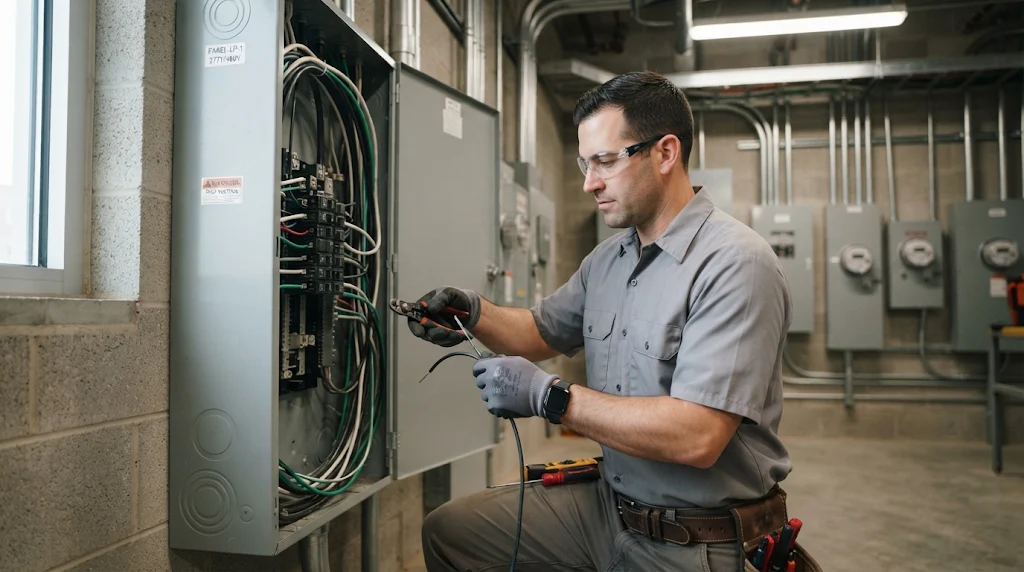
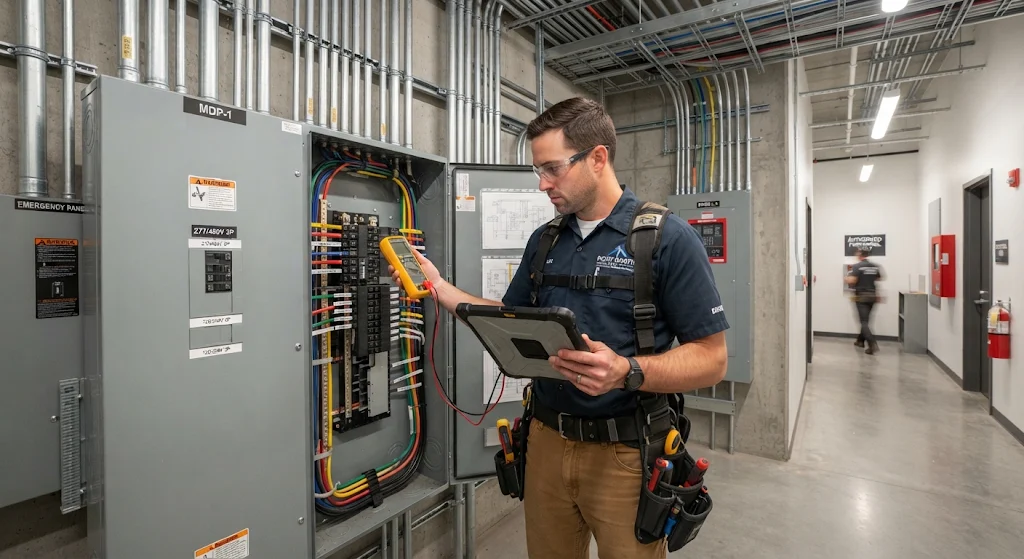
Unlike single-phase residential electrical, commercial operations in Greater Portland require 120/208V or 277/480V three-phase electrical systems to power heavy HVAC chillers, commercial refrigeration racks, air compressors, and industrial manufacturing machinery. Commercial electricians install heavy-duty Main Distribution Panels (MDP), step-down dry-type transformers, and power factor correction capacitors, balancing loads across all three phases to minimize neutral current and prevent transformer overheating.
Tenant Improvements, Fit-Outs & Retail Modernization
Commercial leasing and property management in Greater Portland frequently involves tenant fit-outs for new restaurants, professional offices, medical suites, and retail storefronts. Licensed electrical contractors design and route dedicated circuits in EMT (Electrical Metallic Tubing) conduit, install commercial busways, wire commercial kitchen cooking suites with shunt-trip breakers connected to fire suppression systems, and configure dedicated IT server room power.
Life Safety, Emergency Egress & Fire Alarm Integration
Commercial properties in Maine must adhere to strict NFPA 101 Life Safety Code standards enforced by local municipal fire marshals. This includes installing illuminated LED exit signs with 90-minute battery backup, emergency egress floodlights, central battery inverter systems, and electrical coordination with automated fire suppression and alarm systems. Regular annual testing and documentation ensure continuous code compliance.
Local Building Context & Permitting Oversight in Greater Portland
All electrical trade operations within Greater Portland are subject to the technical mandates of the National Electrical Code (NFPA 70) and oversight by the Maine Electricians' Examining Board alongside local municipal inspectors. Contractors pulling permits for Commercial Electrical work in Greater Portland must ensure appropriate conductor sizing, continuous load derating factors, proper overcurrent protection device coordination, and comprehensive system grounding.
Furthermore, local utility coordination is critical. Electricians serving Greater Portland routinely interface with regional electric utilities (such as Central Maine Power or Versant Power) to coordinate overhead drop disconnections, meter socket seals, cold-sequence disconnects, and underground service laterals. Adhering strictly to utility rules prevents dangerous delays and ensures that installations pass municipal inspection on the first visit.
Why Professional Electrical Referral Matters in Greater Portland
WATT911 serves as an independent connection platform designed to streamline your search for qualified local electrical professionals. We connect you with independent local electrical contractors who maintain current commercial insurance, proper Maine Master or Journeyman licensing credentials, and established trade experience in Greater Portland. All pricing, estimates, dispatch fees, and warranty protections are handled transparently between you and your contractor, ensuring clear expectations from project start to final sign-off.